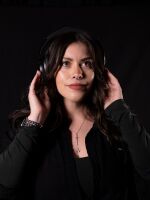
Dre Castillo: So this is your 10th record. And so if I'm not mistaken it's the first time you've made a full LP without any sampling with every instrument recorded from scratch. So after being committed to a style and sound for so long, what made you finally decide to break that rule and create this new album?
Ted Feighan: You know, I think that I had the idea for it in my head this whole time.
And I think more than anything, it was about sort of proving to myself that I could do it. I think a lot of people, producers or people who are focused more in the sampling beat world, I think a lot of them feel this need to sort of prove themselves as musicians. And I don't know if that was so much of what it is, but more so for myself to be like, I want to try to make a Monster Rally record that is true to sort of like the concept of Monster Rally but do it in a way that is totally different from how I've done it before to sort of push my own boundaries of what I thought the project could be.
And I had started like doing some recording of songs like this over the past decade or so, but nothing like planned particularly for a release. So it was nice to sort of like really focus up and do that altogether.
Castillo: And I would imagine like leaping into this unknown, you know, never having done this before, after making music for so long, was probably scary in some ways, but also like equally as rewarding.
Feighan: Yeah, absolutely. I mean, I'm still scared. But it was. I mean, I recorded probably like a year and a half for this record. And I spent a lot of the time being freaked out and being doubtful and wondering what people are going to think. And then also being like very excited and proud of what I made. And just like all of the feelings together for all of it, really.
But yeah, I did feel a lot of it was very scary. It felt, more than any other record I've made, more like, personally bearing myself, you know what I mean?
Castillo: Yeah. So I know that before you were really leaning on your record collection, which I would love to peer into. What did you feel like you had to relearn about making music without leaning on that crate?
Feighan: Yeah, I think the biggest thing for me is before it was like a mindset shift, whereas before, I would say I was sort of curating things and make making beats, but sort of like, making these little vignettes and scenes and those sort of things based on, you know, found items. Whereas the new record was much more of a focus on actual songwriting, so it was a lot more thought out, a lot more like planning went into some of the stuff and into the structures of things between me and some of the people I worked with. Whereas before it's just like, all vibes. So just like, here's this and this and this. And like, if you listen to some of the other stuff in the records before this, it's just like, the timing doesn't make sense. Like, sometimes I'll do something for four measures. And then sometimes the third one will just be for five, you know what I mean? And it's just because I'm playing all that stuff live as I'm recording it. So that's a lot more free flowing, which I love too.
But for the Echoes record, it was mostly just like a lot of thought on how these songs are going to work and how they could possibly work for vocals, which was like a huge thing for me to think about. And I wound up having to pull a few things back so that they weren't like in major competition with the vocals. But I also left a bunch of stuff because I was like, I don't want to be untrue to the idea of this. Do you know what I mean?
Castillo: Yeah, So did you record these tracks, and then you thought of the people that you wanted to collaborate with on those tracks? Or was it more collaborative and you created the track together? Like, what was the process like?
Feighan: Yeah, I would say it was kind of half and half. So for a lot of them, several tracks in the record, I made in with the artists in mind. And so like for the LEISURE track, for example, I had like three tracks that I was making for them. And in my mind, I was thinking, because I knew it would never be this way, but I was thinking like, I'm going to try to make a LEISURE song, you know, and so I was just like, I'm going to do that. But what came out was just a Monster Rally song I guess, but it worked enough for them. And so some of that stuff worked well like that.
Some people I sent a few things like demos I had made, and they liked a few things, or they weren't sure that it was going to work. And so I would come back and think about like, what I thought might be cool with them. And so like for the Sessa song, I mean, I really, really love his work. And so I was like, he does all this sort of like, Tropicália, Bossa Nova stuff, so it would be cool to kind of have it be more like kept in the vein baile minas, you know, and bring it into almost like a dub kind of track.
And so there was a lot of that stuff. And then for some things, I sent some songs to people, and they didn't change too much about the structure or anything in the song. But when they came back in the way that the vocals were treated like, way different than I was expecting, in the best possible way.
So this was the way the song with Miles (Michaud) from Allah-las was, where that song was weird to begin with. And then he sent back some stuff that just like, it was it was out there, but it works so well. And so like, that was one of the coolest moments where it's like, I didn't know the song could be this, you know, and like, that's kind of the magic of working with other people.
Castillo: Yeah. Well, because most of the time you've been working alone, right? So this is like your first collaborative piece, do you find yourself wanting more of that in your future?
Feighan: Yeah, it's funny. It's a combination of like, I want none of it.
And also, I can't imagine not doing more of it. So like, it's funny, because it's a very singular process. A lot of times when I'm working, like, it'll just be me. I'll be in my studio. It's like late at night. I don't have any lights on, you know what I mean? It's just like, very personal. So to have even just another single person in the mix, is so different. And for me, that was one of the scariest parts was not only to be more vulnerable in that way, but also, I think a lot of musicians and me in particular, feel a little bit like, intimidated by other people, especially ones I admire. And bringing them in to be like, "They're gonna find out that I'm not good." You know? So I had to get past a lot of those feelings. And I think I did.
And honestly, this whole record was kind of an exercise for me and accepting those things and not letting them, you know, hold me back creatively. Honestly, I feel a little bit like a different person than I did before in that regard. And that's the most wonderful thing and like magical thing about music where I could sit here and I could program a very simple drum beat, and I could play three chords on a guitar with a little delay and reverb. And then somebody else could be a classically-trained pianist, and they could create like a full arrangement or something. And nobody can say one is better than the other. You know what I mean? It's because it's all about feeling. So it doesn't really matter how good you are, if you've given the right feeling.
But I think bringing together all of these artists, like a lot of international artists and people from way different musical styles, has been really cool to see them come together and have it sound so cohesive. I remember the first time I listened to the record in the final arrangement. And I was just like, Okay, like this, this works. It works really well. And I was so happy about it.
Castillo: I know that a lot of your music is also paired with like, imagery and aesthetic.
So again, with this new sound, how do you feel that influenced that aspect of what you create?
Feighan: I think for me, because the visual is such an important part of all of Monster Rally. That sort of helps center me musically, because I wasn't imagining a whole new visual landscape. I was thinking like "This all exists in the same world." I picture all of the imagery very much being like a world of its own. The music exists in there. And I'm working in that world. And people can go and visit it when they're listening.
And so I think making this artwork and everything alongside making the record kind of helps me feel like, "Alright, is this fitting in this?" Sometimes I would listen to the demos, and I would pull up the album cover when I had it. And I would listen to it at the same time and sort of look at it and figure out if it was existing in that space properly. And so it was actually like, very nice to have that.
Castillo: So does that change with what you want to do with this material live? Like, how do you want that to translate when you're performing?
Feighan: Yeah, I think it's made me rethink a lot about the live stuff, especially because, I mean, I think to myself, I want to do everything, but I have to keep saying like "baby steps,", right? So I always just was by myself. And then I started adding myself, but I would have some instruments and now I have a drummer who plays live with me. And there's a visual element too.
And so just playing that way has made me rethink so many of the songs. And I'm curious for anybody who's been listening when they come to the shows to see like, how the live interpretations of them are. I think it's really cool and going into this next record, everything has made me really think about it from a live setting also. Before I never thought about it that way.
But now I think about all the cool stuff we can do live, and so I'm really excited for the future of touring, of what can translate now. Especially reworking old versions of songs we have. My favorite part of the set is we have the song "Sister Owls" and the second half of it goes into this like dub kind of reggae section. And that moment in the set is like for me, that's the best part. I get real lost. So I'm excited for more moments like that.
Listen to Echoes of the Emerald Sands here.