

-
 “I feel like these two questions are at the heart of all creative process: What is here? What else is here?” In this episode, Rosemerry and Christie talk about Rosemerry’s new book, The Wonderment, and the four questions that are at the heart of it. How do questions drive a creative practice? We also talk about how to create art out of what is familiar and common, how paradox and metaphor work to create a larger lens for re-seeing the world, how sometimes we swing between loving and hating what we’ve written, and how to write poems about injustice and what is happening in the world without making them overtly polemic or divisively political.Poet and teacher Rosemerry Wahtola Trommer is co-host of this podcast. She lives with her family on the banks of the wild San Miguel River in southwest Colorado. Her daily audio series, The Poetic Path, is on the Ritual app. Her poems have appeared on Prairie Home Companion, PBS News Hour, O Magazine, Washington Post’s Book Club, and Carnegie Hall stage. Her recent collections: The Unfolding and The Wonderment. As poet laureate for Evermore, she helps others explore grief and love through poetry. Since 2006, she’s written a daily poem, sharing them on A Hundred Falling Veils.Rosemerry and Christie will be giving the closing keynote at the Grand Mesa Writer’s Symposium! Join them as they talk about how to nurture a creative practice in the midst of everyday chaos.The WondermentRosemerry’s Website
 -
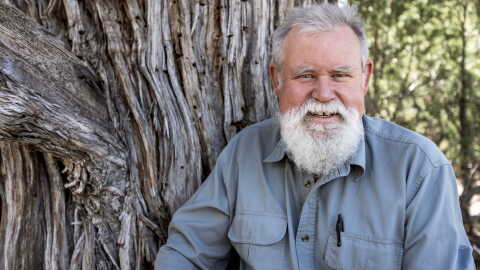 “Make this your worst draft.” That’s what Craig Childs will often say to students when they first sit down to write. “We’re creating stuff out of nowhere, so we’re lucky to get a word down on a page. We’re exploring options.” In this episode of Emerging Form, we talk with the popular creative non-fiction author about his own unusual path to a writing career. Our conversation includes:How to invite intuition and surprise into your writing,How teaching writing changes and enhances our understanding of our own process,How a thesaurus, used unconventionally, can be a great tool for when you’re stuck,Creative ways to take words from a page and bring them to life,And how a journaling practice helps inform a writing practice.Craig will be a keynote speaker at the 2026 Grand Mesa Writers’s Symposium in Cedaredge on September 11-13.CRAIG CHILDS is an explorer who brings tales of deserts and ice caps to the page. He has published more than a dozen critically acclaimed books, including The Secret Knowledge of Water, Atlas of a Lost World, Stone Desert, Virga & Bone, Tracing Time, and The Wild Dark. His books have won numerous honors including the Reading the West Book Award, Southwest Book of the Year, a Foreword INDIES medal, and the Orion Book Award. His nonfiction narratives and journalism have appeared in The Atlantic, Outside, High Country News, The New York Times, The Sun, the Los Angeles Times, NPR, and Radiolab. He blogs at Last Word On Nothing. Childs lives in southwest Colorado.


-
 “I didn’t know I enjoyed thinking so much,” says science writer Roxanne Khamsi when asked what surprised her most about writing her first book Beyond Inheritance. “I thought I enjoyed interviewing people and reading research papers and the process of finding the right verb in a sentence. What’s hard for me is once I get into that thinking space, I can’t let go of it.” In this episode we talk about how she made the leap from writing articles to writing a book—and why they are so different. We talk about creating an arc for a book of essays, what to do when the structure for your book isn’t working, letting go of a project once its over, meeting our self critic, the role of obsession in writing a book, the art of going for “the big idea” and how to carry that in a nonfiction book, how writing reflects the author’s personality.
 -
 “I use play as kind of a backdoor to talk about tougher subjects,” says poet Kelli Russell Agodon, “but also as a front door for the reader to be able to listen.” Her most recent book, Accidental Devotions, blends humor, vulnerability, aging, the chaos of relationships, and the art of humaning.
 -
 Everyone gets stuck. And in this interview with writer and teacher Ramona Ausubel, we talk about why this is normal and practical, usable ways to meet a page when we don’t think we can go on. Drawing from her newest book, Unstuck:101 Doorways leading from the Blank Page to the Last Page, Ramona shares with us why certain strategies work only at certain stages of creative projects. We talk about finding patterns, ways to develop characters and create scenes, different ways to approach different drafts, the half-draft approach, finding opposition and so much more.
 -
 A poet and a science writer walk into a podcast—and laugh, tease, joke, uplift, and ask each other tough questions about creative process. In this episode of Emerging Form, the hosts Rosemerry Wahtola Trommer and Christie Aschwanden ask each other some of the questions they like to ask their guests. It’s a raucous, fun episode in which they rib each other as only best friends can do, taking turns being in the hot seat to talk about ambition, how getting older has affected creative practice, sincerity, empathy, curiosity and, of course, wine.
 -
 “It feels like a radical practice not to be productive, to allow the space to guide what comes next,” says prolific poet and beloved writing teacher James Crews. “I have tendencies toward control.” In this episode, we talk about the importance of slowing down and doing less, and why a creative practice depends on this. James reads several poems from his new collection, Breathing Room: Poems of Rest and Retreat, and we talk about creating healthy boundaries around productivity, embodiment in a creative practice, and poetry as a spiritual practice.
 -
 For thirty years, Dimity McDowelll made a life–and a living–with running and writing about running. Then, for health reasons, she had to stop. In this episode of Emerging Form, we talk with Dimity about how our creative identity is linked with other identities and what to do when that radically changes. We discuss her new book The Twenty-Seventh Mile: How to Smooth the Rough Transition out of Your Running Years, and the difference between writing a book with a partner and writing alone. We talk about embodied writing, the importance of empathy when incorporating other people’s stories, and the challenges of writing about loss.
 -
 What’s the secret to making a living doing your art? “There really is no magic trick … spoiler,” says Mason Currey, author of Making Art and Making a Living. But in this episode of Emerging Form, we talk with Currey about what he learned by studying how other creatives across genres, cultures and centuries have made it work. We also talk about his own relationship to creative practice–little tricks and attitude shifts, the importance of repetition and habit, developing trust in our own practice, and which compromises can really harm our creative energy.
 -
 “I discovered a narrative though my journaling,” says author, creative coach and workshop leader GG Renee Hill. “Writing is a place I can be raw and honest with myself.” In this episode, we speak with GG about her new book, Story Work: Field Notes on Self-Discovery and Reclaiming Your Narrative.
 -
 “Elation and connection” are two of the side effects of communal singing, and for over four decades, Kate Munger has been writing songs to be sung in tender and difficult moments–at the bedside of the dying, in prisons, and now at gatherings to repair democracy. We talk with Kate about what makes a good communal song, her writing process, how song can transform a negatively charged moment, and what are some of the challenges for communal singing in this moment.
 -
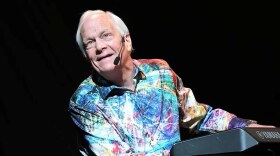 Imagine you’ve just heard an hour-long keynote full of history, statistics, personal story and social justice. And then someone comes to the stage, sits at the piano, and sings back a song that encapsulates the emotional and intellectual content you’ve just heard. That is the improvisational talent of Ken Medema, a keyboardist/pianist, singer, storyteller and performer. In this episode of Emerging Form, we speak with Ken about the importance of a “fence” when it comes to creative play, how to listen for key phrases, how to make people feel truly seen and heard through creative response, plus there’s a spontaneous mid-interview performance!


